Kitchen Sink Materials Explained: Stainless Steel vs. Granite Composite
Choosing the Right Kitchen Sink Material
Your kitchen sink is one of the hardest-working fixtures in your home. The material you choose affects durability, maintenance, appearance, and functionality. Let's compare the two most popular premium options: stainless steel and granite composite.
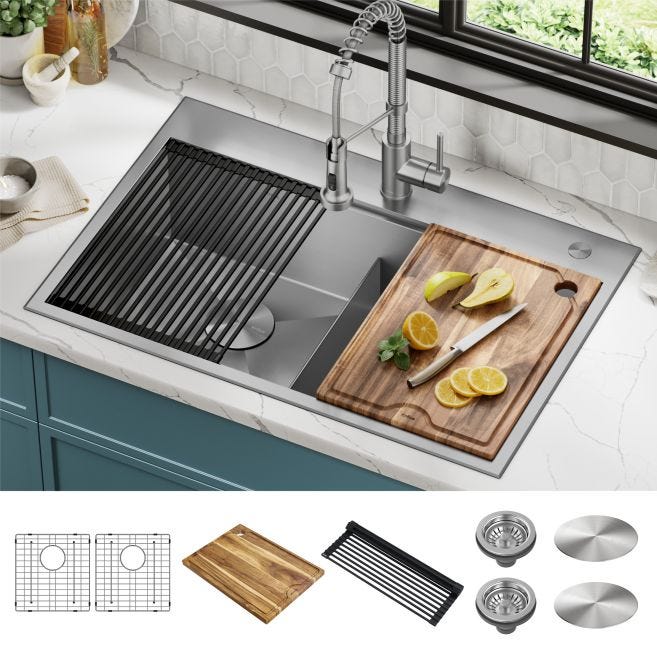
Stainless Steel Sinks
Why Choose Stainless Steel?
Stainless steel has been the kitchen standard for decades, and for good reason. Brands like KRAUS and BLANCO have perfected this material with commercial-grade quality.
Advantages
- Durability: Resistant to chips, cracks, and stains
- Heat Resistance: Can handle hot pots and pans without damage
- Hygiene: Non-porous surface resists bacteria
- Versatility: Complements any kitchen style
- Value: Excellent performance at various price points
- Lightweight: Easier installation
Considerations
- Can show water spots and fingerprints
- May be noisier without sound-dampening pads
- Can scratch over time (though this adds character)
Gauge Matters
Lower gauge numbers mean thicker steel. Look for 16 or 18-gauge for residential use. KRAUS uses premium 16-gauge steel with sound-dampening technology for superior performance.
Granite Composite Sinks
What is Granite Composite?
Made from 80% natural granite stone mixed with acrylic resins, creating an incredibly durable and beautiful material. BLANCO's SILGRANIT® is the gold standard in this category.
Advantages
- Scratch Resistance: Extremely hard surface resists scratches
- Heat Resistance: Can withstand temperatures up to 536°F
- Stain Resistance: Non-porous surface repels stains
- Color Options: Available in multiple colors to match your design
- Quiet Operation: Naturally sound-dampening
- UV Resistant: Colors won't fade over time
Considerations
- Higher price point than stainless steel
- Heavier, requiring solid cabinet support
- Limited color changes if you renovate
Head-to-Head Comparison
Durability
Winner: Granite Composite - More resistant to scratches and impacts, though both materials are extremely durable.
Maintenance
Winner: Tie - Both are easy to clean. Stainless steel shows water spots more easily, while granite composite may need occasional mineral oil treatment.
Appearance
Winner: Personal Preference - Stainless steel offers a professional, modern look. Granite composite provides color options and a more traditional or contemporary aesthetic.
Noise Level
Winner: Granite Composite - Naturally quieter, though quality stainless steel sinks with sound pads come close.
Value
Winner: Stainless Steel - More options at various price points, though premium granite composite offers excellent long-term value.
Brand Recommendations
KRAUS
Exceptional stainless steel sinks with commercial-grade construction, sound-dampening technology, and modern designs. Perfect for contemporary kitchens.
BLANCO
Pioneers of SILGRANIT® granite composite technology. Offers both premium stainless steel and granite composite options with German engineering excellence.
Making Your Choice
Consider your cooking habits, kitchen style, and maintenance preferences. If you want a professional look with maximum versatility, choose stainless steel. If you prefer color options and maximum scratch resistance, granite composite is ideal.
Both materials from premium brands like KRAUS and BLANCO will serve you well for decades. The best choice is the one that fits your lifestyle and aesthetic vision.
Explore our collection of premium kitchen sinks to find your perfect match.